Real-World Functional Skills, Measured and Strengthened
An interactive platform that evaluates and trains essential everyday skills — from online banking to medication management — giving individuals practical tools to maintain independence.

Featured in Research






Outcomes & Impact
Training reduced avg. errors by up to 97% across key everyday tasks.*

Money Management
86–93%

Medication Management
89–97%

Internet Management
86–97%

Transportation Management
86-88%
Improvements seen after up to 12 weeks of FUNSAT™ training, 1-2 times a week for 30-60 minutes.
*Based on published peer reviewed research with individuals with either mild cognitive impairment or normal cognition.
How FUNSAT™ Works
Designed for Real People, Backed by Science
Easy to get started
Works on most computers and tablets
Easy to implement
EMR integration and integrated workflow
Easy to use
Automated scoring, reports and follow-up recommendations
Easy to operate
Continuous training and support
Who Benefits from FUNSAT™
Making an Impact Across Every Level

For Physicians, Medical Groups & Specialists
- Streamlined functional skills screenings and training
- Actionable clinical insights
- Improved documentation & potential reimbursement
- Enhanced Patient Engagement
- Efficient Referral Management

Managed Care Health Plans
- Early detection of and training of functional skills decline
- Improved member engagement
- Cost containment without ER or hospital metrics
- Supports quality and compliance goals

ACO’s, MSO’s & Health Systems
- Supports Value-Based Care Contracts
- Reduces Clinical Burden
- Enhances Patient Engagement
- Strengthens Provider Performance
- Scalable Across Networks

Pharma, CRO’s & Other Research
- Optimize Clinical Trial Participant Selection
- Optimize Clinical Trial Outcome
- Validated Digital Tools with research support by the NIH
- Cost-effective and Easy to Access Digital Tools
Publications
FUNCTIONAL SKILLS TRAINING
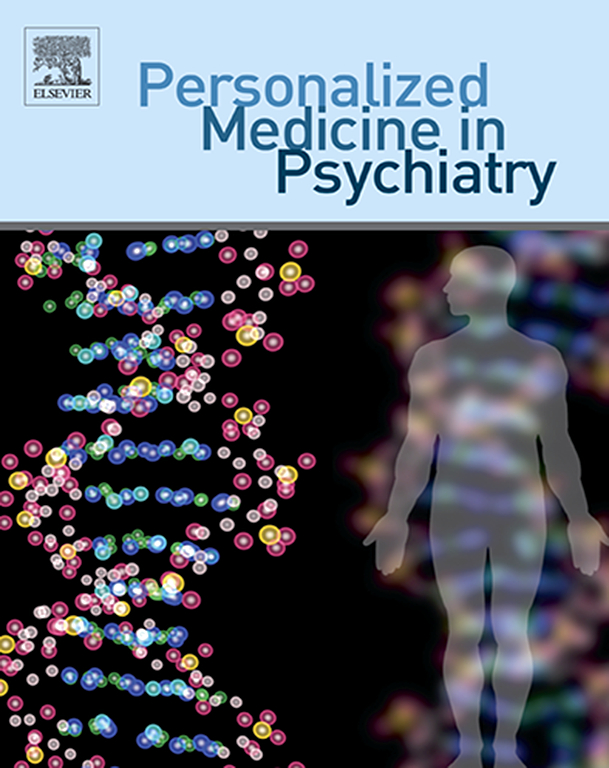
Prediction of sustained benefits from computerized training in older individuals with and without mild cognitive impairment: A machine-learning comparison of participant characteristics, baseline performance, and training gains
Macchiarelli et al., Personalized Medicine in Psychiatry, Volumes 53–54, Article 100172 (2025)
Personalized Medicine in Psychiatry
Prediction of sustained benefits from computerized training in older individuals with and without mild cognitive impairment: A machine-learning comparison of participant characteristics, baseline performance, and training gains
SUMMARY
This study asked why the benefits of computerized functional skills training persist for some participants but not others. Eighty-four older adults with mild cognitive impairment (MCI) and 68 with normal cognition received remotely delivered FUNSAT™ training twice weekly for up to 12 weeks; half of the MCI group first received a burst of computerized cognitive training. Thirty days after training, the researchers used machine-learning models to predict whether participants retained at least 80% of their gains on the relatively easy ticket-purchase task and the more difficult internet-banking task.
FUNSAT™ produced substantial gains, with effect sizes above 0.75, and most participants retained those gains: 78% for ticket purchase and 65% for internet banking. The strongest predictors of durability came from the training process itself—such as improvement in completion time and end-of-training performance—rather than from static participant characteristics alone. Computerized cognitive training also improved durability for participants with MCI. These findings show a positive, precision-oriented use of FUNSAT™: its detailed performance data can help identify different kinds of poor outcomes and support more personalized training designed to improve both mastery and lasting benefit.

FUNCTIONAL SKILLS TRAINING
Maintenance of Technology-Based Functional Skills Training Gains in Older Participants with and without Mild Cognitive Impairment: The Role of Booster Training
Lin et al., The American Journal of Geriatric Psychiatry (2025)
The American Journal of Geriatric Psychiatry
Maintenance of Technology-Based Functional Skills Training Gains in Older Participants with and without Mild Cognitive Impairment: The Role of Booster Training
SUMMARY
The current study examined training gains maintenance over time and the role of booster sessions on sustaining training gains for the technology-based Functional Skills Assessment and Training program (FUNSAT™) in older adults with and without Mild Cognitive Impairment (MCI).
The findings support the efficacy of the FUNSAT™ training program as most participants maintained or increased their training gains over time, and that the booster training was beneficial in terms of sustaining gains, indicating that booster sessions play a critical role in skills training.

FUNCTIONAL SKILLS TRAINING
Interpreting self-report measures about cognition: What matters and what to do with the data: A commentary on “Awareness of baseline functioning and sensitivity to improvement in older people with and without mild cognitive impairment receiving a computerized functional skills training program
Mahncke, International Psychogeriatrics (2025)
International Psychogeriatrics
Interpreting self-report measures about cognition: What matters and what to do with the data: A commentary on “Awareness of baseline functioning and sensitivity to improvement in older people with and without mild cognitive impairment receiving a computerized functional skills training program
SUMMARY
Biomarker tests of brain health may be positive, neuropsychological and functional measures of cognition may be positive – but will the patient’s personal experience with their cognitive performance be in alignment with these measures? Harvey and collaborators dig into this issue, with a careful analysis of the correlations between neuropsychological, functional, and self-report measures of cognitive function at baseline and the relationship between change scores on these measures after a cognitive training intervention.
Harvey and colleagues suggest a different approach – that cognitive training programs (and presumably any behavioral intervention targeting cognition, e.g., exercise, nutrition, mindfulness) should include components designed to improve the accuracy of participants’ awareness of their cognitive abilities.
FUNCTIONAL SKILLS TRAINING
Awareness of baseline functioning and sensitivity to improvement in older people with and without mild cognitive impairment receiving a computerized functional skills training program
Harvey et al., International Psychogeriatrics (2024)
International Psychogeriatrics
Awareness of baseline functioning and sensitivity to improvement in older people with and without mild cognitive impairment receiving a computerized functional skills training program
SUMMARY
The objective of the study was to examine the relative ability of participants with Mild Cognitive Impairment (MCI) to self-assess their cognitive performance and training gains.
Participants with MCI underestimated their performance deficits at baseline. Self-reports of changes in everyday functioning do not track the substantial objective changes. Previous studies have reported a lack of sensitivity to training gains in several different conditions. Strategies to increase awareness of training gains may be required to sustain treatment benefits.
FUNCTIONAL SKILLS ASSESSMENT
Migration of digital functional capacity assessments from device resident to cloud-based delivery: Development and convergent validity
Harvey et al., Schizophrenia Research: Cognition (2024)
Schizophrenia Research: Cognition
Migration of digital functional capacity assessments from device resident to cloud-based delivery: Development and convergent validity
SUMMARY
Decentralized clinical trials are leading to rapid changes in assessment technology, including an expansion of interest in remote delivery. As technology changes, some of the updates include migration to fully cloud-based software and data management, with attendant differences in hardware, response modalities, and modifications in the level of tester engagement. We present comparative data on successive generations of two widely used functional capacity measures, the Virtual Reality Functional Capacity Assessment Tool (VRFCAT) and the Functional Capacity Assessment and Training System (FUNSAT).
Four samples of healthy older individuals completed either the original device-resident, computer-administered versions, or cloud-based, tablet delivered versions of these tasks. For the FUNSAT, performance and correlations with age and cognitive task scores were generally similar across versions for English Speakers, though there were some differences related to the testing language for the cloud-based version. These results support the feasibility of migrating digital assessments to cloud-based delivery and substantiate fundamental similarity across delivery strategies.
FUNCTIONAL SKILLS ASSESSMENT
Utilizing Technology to Enhance the Ecological Validity of Cognitive and Functional Assessments in Schizophrenia: An Overview of the State-of-the-Art
Horan et al., Schizophrenia Bulletin Open, 5(1), sgae025 (2024)
Schizophrenia Bulletin Open
Utilizing Technology to Enhance the Ecological Validity of Cognitive and Functional Assessments in Schizophrenia: An Overview of the State-of-the-Art
SUMMARY
This narrative review surveys digital technologies designed to make cognitive and functional assessment more representative of everyday life in schizophrenia. It contrasts conventional tests with digitally delivered simulations and remote measures, then reviews the evidence for several contemporary approaches. A dedicated FUNSAT™ section describes six realistic technology-related functional tasks, including banking, ticket purchase, medication management, telephone menus, pharmacy website use, and online shopping, along with outcomes such as completion time, errors, and task mastery.
The review presents FUNSAT™ positively as a standardized, cloud-capable system with automated administration, scoring, and data transfer; three alternative forms support repeated assessment. It notes convergence with cognitive and legacy functional-capacity measures while preserving the distinction between cognition and functional performance. FUNSAT™ was also sensitive to remotely delivered intervention effects, with a reported composite effect size of 0.75, and post-training performance related to cognition, other functional-capacity measures, and real-world activity captured by ecological momentary assessment. Together, these features support FUNSAT’s usefulness for ecologically relevant assessment, remote research, and measurement of meaningful treatment response.
FUNCTIONAL SKILLS TRAINING
Computerized functional skills training and the importance of early errors during training
Jester and Shin, International Psychogeriatrics, 37(2), Article 100024 (2025)
International Psychogeriatrics
Computerized functional skills training and the importance of early errors during training
SUMMARY
This commentary interprets the clinical and intervention implications of the FUNSAT™ mastery study by Harvey and colleagues. It focuses on the finding that errors made very early in training—especially on the first and least difficult task—were more informative about eventual mastery than completion time or a global cognitive screening score. The authors consider why such early errors may occur, including task familiarity, technology experience, motivation, and the fit between a participant’s abilities and the training demands.
The positive contribution of FUNSAT™ is its ability to generate precise, task-level information early enough to act on it. Rather than treating early mistakes as evidence that a participant cannot benefit, the commentary frames them as signals for additional orientation, feedback, smaller training steps, or an alternative training pathway. FUNSAT’s automated capture of errors and performance makes this type of rapid personalization feasible and creates an opportunity to improve engagement, reduce nonmastery, and help more older adults obtain tangible benefits from functional skills training.
FUNCTIONAL SKILLS ASSESSMENT
Novel measures of cognition and function for the AD spectrum in the Novel Measures for Alzheimer’s Disease Prevention Trials (NoMAD) project: Psychometric properties, convergent validation, and contrasts with established measures
Hyun Kim et al., Alzheimer’s and Dementia (2024)
Alzheimer’s and Dementia
Novel measures of cognition and function for the AD spectrum in the Novel Measures for Alzheimer’s Disease Prevention Trials (NoMAD) project: Psychometric properties, convergent validation, and contrasts with established measures
SUMMARY
This study derived composite scores for two novel cognitive measures, the No Practice Effect (NPE) battery and the Miami Computerized Functional Skills Assessment and Training system for use in early-stage Alzheimer’s disease (AD) clinical trials. Their psychometric properties and associations with AD risk markers were compared to those of well-established measures.
Highlight were that well-established cognitive tests may not accurately detect subtle cognitive changes. No Practice Effect (NPE) and Computerized Functional Skills Assessment and Training are novel measures designed to have improved psychometric properties. Novel measures had better psychometric properties compared to established measures. Significant associations with Alzheimer’s disease biomarkers were found with novel measures.
FUNCTIONAL SKILLS TRAINING
Association of Racial Status and Training Language with Baseline Performance and Training Gains During Computerized Training of Technology-related Everyday Functional Skills In Older Adults
Macchiarelli et al., The American Journal of Geriatric Psychiatry (2024)
The American Journal of Geriatric Psychiatry
Association of Racial Status and Training Language with Baseline Performance and Training Gains During Computerized Training of Technology-related Everyday Functional Skills In Older Adults
SUMMARY
Research consistently finds that lower baseline performance predicts greater gains with computerized training. Lower baseline performance can originate from many factors, including educational and environmental disadvantages, leading to reduced exposure to functional tasks. Across six computerized technology-related functional skills, baseline performance and training gains were compared across race and training language.
Lower baseline performance of functional skills was found to be a positive predictor of training gains and was efficiently reversed through training. Even participants who initially appeared more impaired achieved substantial gains, congruent with the results reported in psychiatric populations. Critically, low baseline competence should not be interpreted as reflecting negatively on potential training gains.
FUNCTIONAL SKILLS TRAINING
The Efficacy of a Home-Based Functional Skills Training Program for Older Adults With and Without a Cognitive Impairment
Czaja et al., Innovation in Aging (2024)
Innovation in Aging
The Efficacy of a Home-Based Functional Skills Training Program for Older Adults With and Without a Cognitive Impairment
SUMMARY
The performance of everyday technology-based tasks, such as online banking or shopping, can be challenging for older adults, especially those with a cognitive impairment. Technology-based tasks are cognitively demanding and require learning new skills. This study explored the efficacy of a technology-based functional skills assessment and training program (FUNSAT) among aging adults with and without mild cognitive impairment (MCI) in home settings.
Implications of the study were that nonimpaired aging adults and those with MCI can learn to perform technology-based everyday tasks. Further, home-based technology training protocols are feasible for aging adults with and without a cognitive impairment.
What Customers and Users Are Saying



Frequently Asked Questions
FUNSAT™ is a 6 Modules, 3rd generation, evidence and technology based functional skills assessment and training platform. It is designed to help people regain their prior functional skills or assist them with the acquisition of new functional skills such as those needed to manage emerging and existing technologies.
A cognitive assessment is an evaluation of a person’s abilities related to, for example memory, attention, reasoning, pattern recognition, language, and problem-solving skills. A functional skills assessment measures practical abilities necessary for daily life, work, or education, with different assessments focusing on different specific life skills (e.g., the ability to organize medication, use public transportation or manage finances). These assessments can evaluate a person’s level of independence in performing daily tasks, inform the need for support services, and help set goals for education or therapy.
It only takes one to two weekly training sessions for 30 to 60 minutes and FUNSAT™ can be trained in a group setting at a professional facility such as a memory clinic, a mental health facility, a community center or when convenient at home. Programs typically last between 6 and 12 weeks with follow-up re-assessment and training booster sessions at appropriate times.
Currently FUNSAT™ covers the following activities: Online Banking, ATM Banking, Metro Ticket Kiosk, Phone Prescription Refill, Online Pharmacy Shopping and Prescription Refill, Medication Label Comprehension and Medication Organizer. More modules are in development.
No special equipment is required, as the FUNSAT™ works on most computers and tablets with a Wi-Fi or LTE connection. Recommended minimum screen size for tablets are 9.7 inches and 11 inches for laptops and Chromebooks.